
Neuroplasticity & the Bio-Psycho-Social Model
Beyond the 12-Steps: How Modern Science Is Rewiring the Addicted Brain
For much of the last century, addiction treatment focused on one core idea: abstinence through willpower and structure. Programs were built around discipline, routine, and behavioural rules—often with little explanation of why they worked, or why they sometimes didn’t.
In 2026, that model is no longer enough.
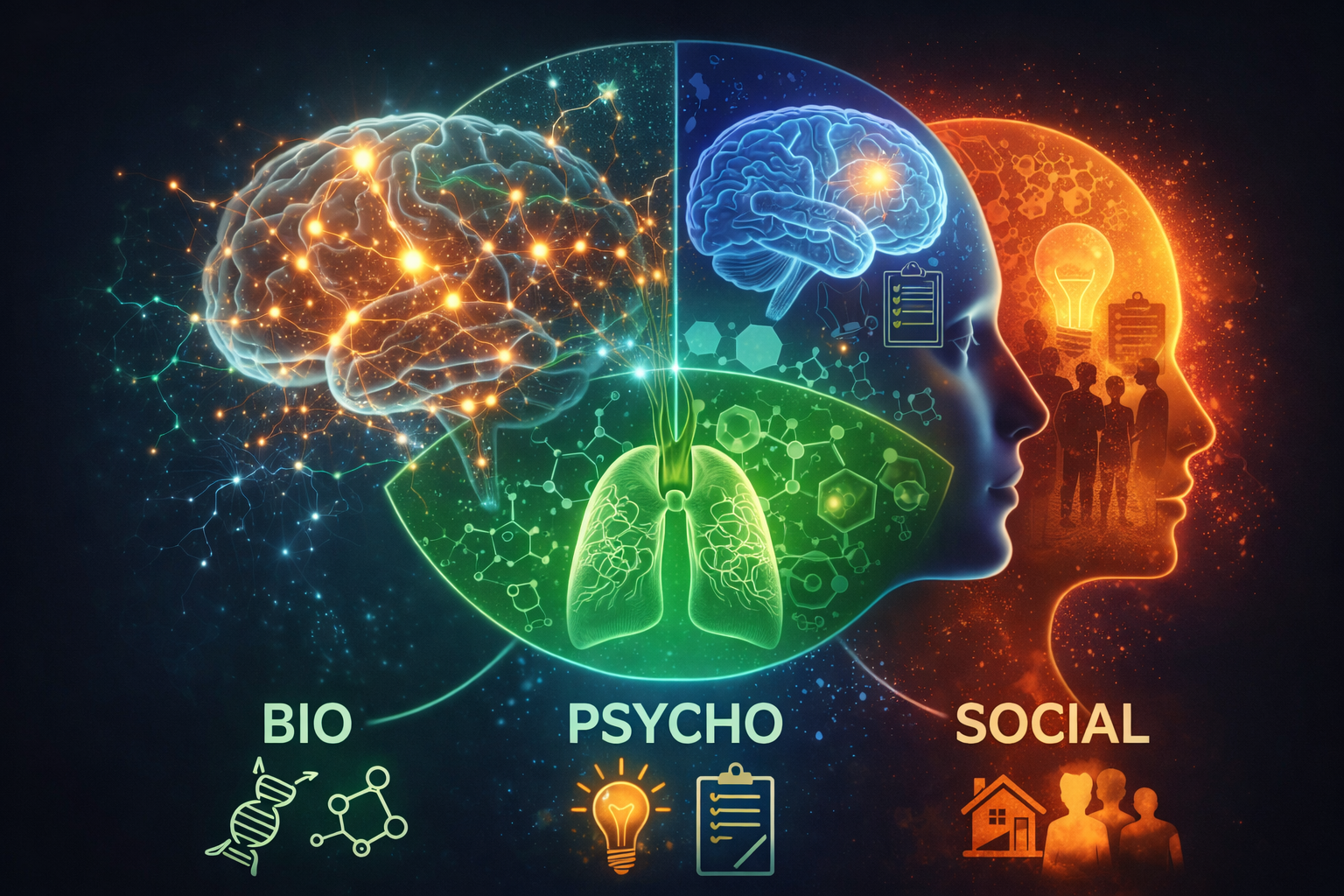
Modern neuroscience has reshaped how we understand addiction, recovery, and long-term change. At the centre of this shift is neuroplasticity—the brain’s ability to reorganise, adapt, and heal—and the bio-psycho-social model, which recognises that addiction is never just about substances. It is about biology, psychology, and environment interacting over time.
At Savasana Private, this science informs every aspect of care. By integrating evidence-based therapy, targeted nutrition, and restorative natural environments, recovery becomes more than symptom management—it becomes a process of literal brain rewiring.
Key Takeaways
Modern addiction treatment recognises that recovery involves rewiring the brain’s neural pathways, not just stopping substance use.
Neuroplasticity means the adult brain can adapt and heal through targeted behavioural, psychological, and environmental influences.
Cognitive-behavioural therapy alters thought patterns in ways that directly reshape brain functioning and reduce compulsive behaviour.
Nutritional support plays a critical role in restoring brain chemistry and enhancing emotional and cognitive regulation.
Holistic, evidence-based rehabilitation offers more sustainable outcomes than traditional models focused solely on abstinence and routine.
This article explores how neuroplasticity works, why holistic rehab differs from traditional rehab, and how modern, evidence-based addiction treatment in Sydney is redefining what long-term recovery looks like.
Moving Beyond the 12-Step Era
The 12-step framework has helped many people and still plays a role for some. But it was developed long before brain imaging, neurochemistry research, and trauma science existed.
What it often lacks is a clear explanation of:
How addiction changes brain structure and chemistry
Why relapse risk remains high even with strong motivation
How the nervous system learns—and unlearns—compulsive behaviour
For educated individuals seeking answers, “just don’t use” is no longer a satisfying explanation.
Today’s clients want to understand why treatment works. That’s where neuroscience comes in.
What Is Neuroplasticity (and Why It Matters in Recovery)?
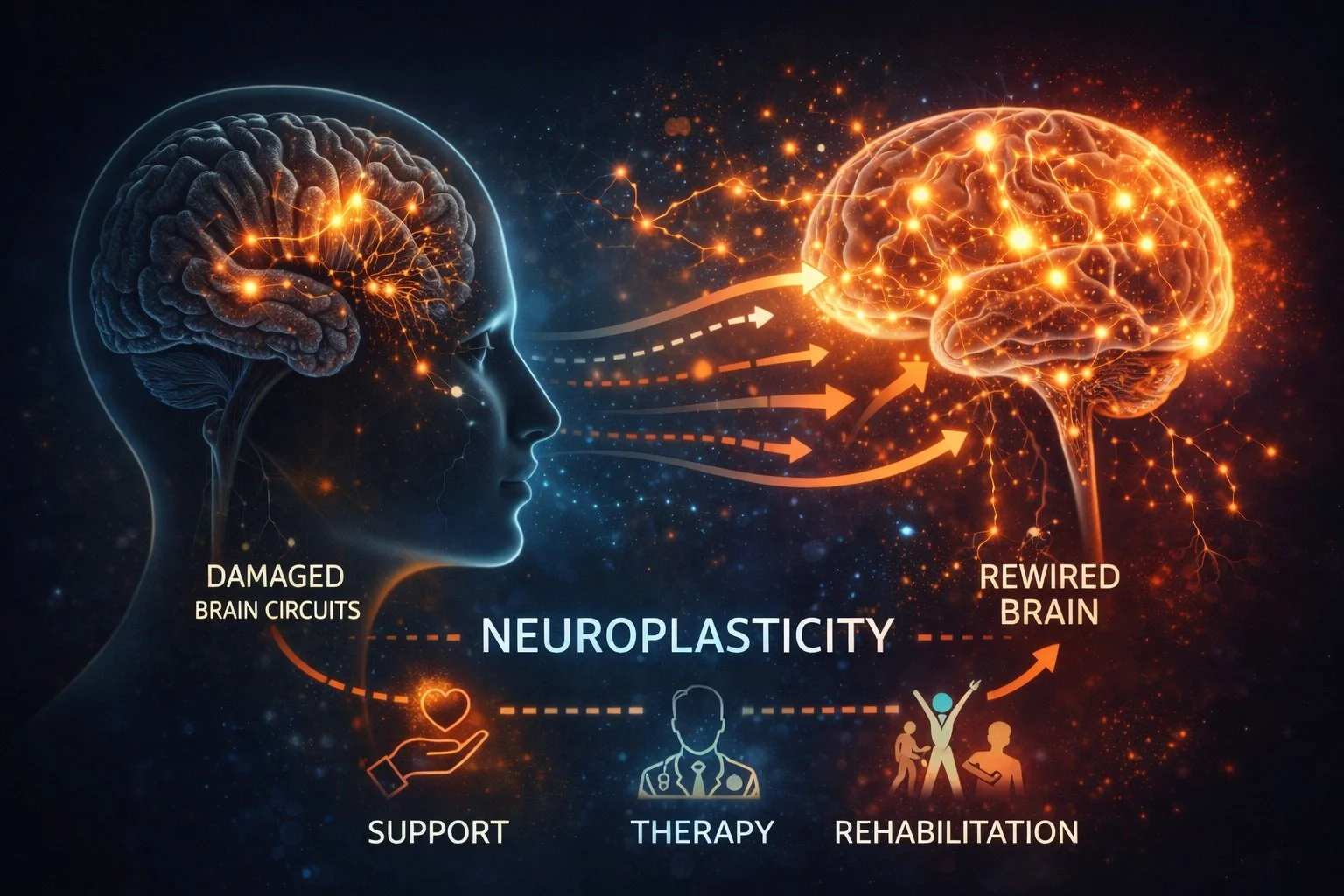
Neuroplasticity refers to the brain’s ability to form new neural connections throughout life. Contrary to old beliefs, the adult brain is not fixed. It is constantly shaped by:
Repeated behaviours
Emotional states
Nutritional inputs
Stress levels
Environmental cues
Addiction exploits this adaptability.
Repeated substance use strengthens pathways linked to reward, relief, and survival. Over time, the brain becomes highly efficient at seeking the substance—even when consequences outweigh benefits.
The encouraging reality is this:
The same plasticity that wires addiction can be used to rewire recovery.
But it requires more than abstinence alone.
Addiction as a Bio-Psycho-Social Condition
The bio-psycho-social model recognises addiction as a dynamic interaction between three systems:
1. Biological Factors
These include:
Dopamine dysregulation
Stress hormone imbalance
Sleep disruption
Nutrient deficiencies
Nervous system overactivation
Substances artificially stimulate reward pathways, reducing the brain’s ability to experience pleasure naturally.
2. Psychological Factors
These include:
Learned coping patterns
Trauma responses
Cognitive distortions (“I need this to function”)
Emotional regulation difficulties
Substances often become tools for managing stress, anxiety, or emotional overload.
3. Social & Environmental Factors
These include:
Chronic stress environments
High-pressure careers
Relationship dynamics
Lack of restorative downtime
Cultural normalisation of substance use
Ignoring any one of these layers limits recovery.
This is where holistic rehab differs fundamentally from traditional rehab.
CBT: Rewiring Thought Patterns That Shape the Brain
Cognitive Behavioural Therapy (CBT) is a cornerstone of evidence-based addiction treatment in Sydney and internationally. Its power lies in its direct impact on neural pathways.
CBT works by:
Identifying automatic thought loops
Challenging distorted beliefs
Replacing habitual responses with adaptive ones
From a neuroscience perspective, CBT:
Reduces activity in fear-based brain regions
Strengthens prefrontal cortex control (decision-making and impulse regulation)
Weakens compulsive reward-seeking circuits over time
At Savasana Private, CBT is not delivered as a generic protocol. It is personalised, paced, and integrated with other biological supports—because cognition does not exist in isolation from the body.
Nutrition: The Missing Link in Brain Chemistry Recovery
One of the most overlooked aspects of addiction recovery is nutrition, despite its direct influence on neurotransmitters.
Chronic substance use often depletes:
Amino acids needed for dopamine and serotonin
B-vitamins essential for neural communication
Magnesium and zinc involved in stress regulation
Without addressing these deficits, the brain struggles to stabilise—even with excellent therapy.
Targeted nutritional support helps:
Restore dopamine sensitivity
Improve mood regulation
Reduce cravings
Support sleep architecture
Lower baseline anxiety
This is not wellness “add-on” thinking. It is foundational neuroscience.
When nutrition is aligned with therapy, neuroplastic change accelerates.
Nature and the Nervous System: Biology Needs Environment
The environment in which recovery occurs profoundly influences the brain.
Research consistently shows that exposure to natural settings:
Lowers cortisol (stress hormone)
Increases parasympathetic nervous system activity
Improves emotional regulation
Enhances learning and memory consolidation
From a neuroplasticity standpoint, this matters.
A calm nervous system is more capable of forming new neural connections. This is why luxury, nature-based settings are not indulgent—they are biologically strategic.
At Savasana Private, the environment is intentionally designed to:
Reduce cognitive overload
Support emotional safety
Allow the brain to exit survival mode
Only then can deeper psychological work truly take hold.
Holistic Rehab vs Traditional Rehab: A Neuroplastic Perspective

The difference between holistic rehab and traditional rehab is not philosophical—it’s neurological.
Traditional Rehab Often Focuses On:
Behavioural control
External rules
Uniform programming
Abstinence as the primary goal
Holistic, Evidence-Based Rehab Focuses On:
Internal regulation
Brain chemistry restoration
Personalised psychological care
Environmental optimisation
Sustainable neural change
When all three bio-psycho-social domains are addressed simultaneously, recovery is no longer about resisting urges—it’s about reducing the brain’s need for them.
This is why outcomes improve when treatment aligns with how the brain actually heals.
Why Educated Clients Are Demanding the “Why”
In 2026, people seeking addiction treatment are more informed than ever.
They are asking:
Why do cravings persist even after detox?
Why does stress trigger relapse months later?
Why does one approach work for some but not others?
Understanding neuroplasticity in recovery provides answers that shame-based or purely behavioural models cannot.
It also builds motivation. When clients understand that:
Their brain adapted for survival
Change is biologically possible
Recovery is a skill-building process
Hope becomes grounded in science, not belief alone.
Savasana Private: Clinical Excellence without Compromise
Savasana Private’s approach reflects the evolution of addiction science itself.
By integrating:
Evidence-based psychological therapies
Nutrition-informed neurochemical support
Nervous system regulation through nature and environment
Treatment becomes both compassionate and precise.
This is why Savasana Private is increasingly recognised among those searching for evidence-based addiction treatment in Sydney—particularly individuals who value understanding, discretion, and long-term outcomes.
Conclusion
Addiction is not a moral failing. It is a learned neurological pattern shaped by biology, psychology, and environment.
The good news is that the brain remains adaptable.
Through neuroplasticity, supported by an integrated bio-psycho-social model, recovery becomes a process of rewiring—not erasing—experience.
At Savasana Private, modern science replaces outdated assumptions, offering a treatment pathway that respects intelligence, honours complexity, and delivers measurable change.